
CALL UTAH TREE DOCTOR TO GET YOU CORYNEUM BLIGHT PROBLEM UNDER CONTROL
What Is The Cause Of My Tree's Illness?
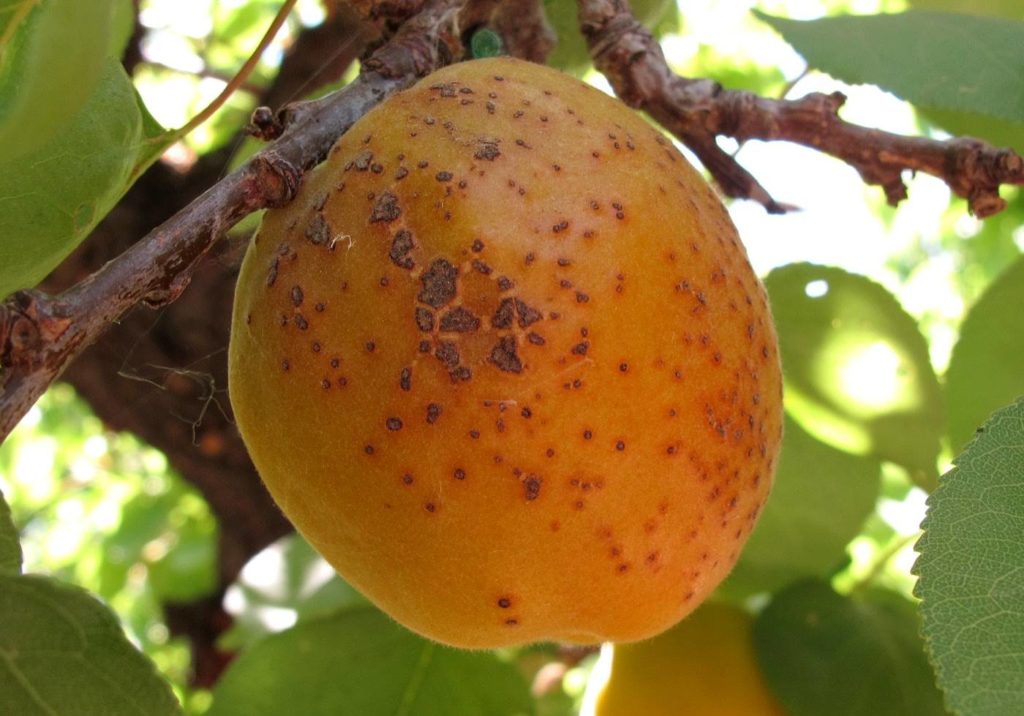
Coryneum blight, also known as shothole blight, is a fungal disease that can cause damage on peach, nectarine, apricot, almonds (ornamental as well as nut bearing) and, to a lesser degree, cherries (tart and sweet). Coryneus blight is caused by the fungal pathogen Wilsonomyces carpophilus.
Damage Done By Coryneum Blight
Almond, apricot, nectarine, peach, prune and cherry trees can be affected by coryneum blight. Both edible and ornamental varieties are vulnerable to infection. Almost all over-ground parts of the plants are affected including the fruits, buds and the stems, but the damage is most noticeable on the leaves. The symptoms begin with small (1/10-1/4”) reddish or purplish-brown spots with light green or yellow ring around them. As the disease progresses the damaged areas become slightly larger and then dry up and fall away, leaving BB-sized holes behind. As the fungus spreads, more leaf tissue is damaged until the leaf falls. Significant infections can reduce the amount of photosynthesis that can occur, weakening the plant, and decreasing fruit production.
How A Basic Diagnoses Is Made
Spotted spores primarily on leaves and fruit and holes in the tree leaves.
What Are the Options for Treating My Ash Trees?
Emerald ash borers are not native to North America, so ash trees have little natural resistance to this pest. Fortunately, there are a variety of insecticide treatment options available and research has shown that treatments can be effective.
PESTS, PROBLEMS AND THEIR TREATMENTS
Ash Borer
Aspen Gall
Aspen Black Leaf Spot
Birch Leafminer
Birch Stink Bugs
Black Locust Borer
Black Turpentine Beetle/Pitch Moth
Boxelder Webworms
Bronze Birch Borer
Chlorosis
Codling Moth
Coryneum Blight
Conifer Bark Beetle Ground
Elm Leaf Beetle
Fall Poplar Borer
Fall Willow Borer
Fire Blight
Greater Peach Tree Borer
Gummosis
Honey Locust Borer
Lesser Peach Tree Borer
Oak Bullet Gall
Oak Lace Bugs
Oak Leaf Blister
Oak Webworms
Pine Tip Weevil
Powdery Mildew
Sawfly
Scale
Slime Flux
Spider Mites
Spring Poplar Borer
Spring Willow Borer
Spruce Cooley Gall Adelgid
Strawberry Root Weevil
Sycamore Anthracnose
Fruitworm