
UTAH TREE DOCTOR CAN HELP YOUR RESOLVE YOUR SLIME FLUX PROBLEM
What Is The Cause Of My Tree's Illness?
Slime flux is a bacterial infection that ferments the sap and causes rot. The bacteria typically appears black in color and has an awful odor.
The Dangers Of Slime Flux
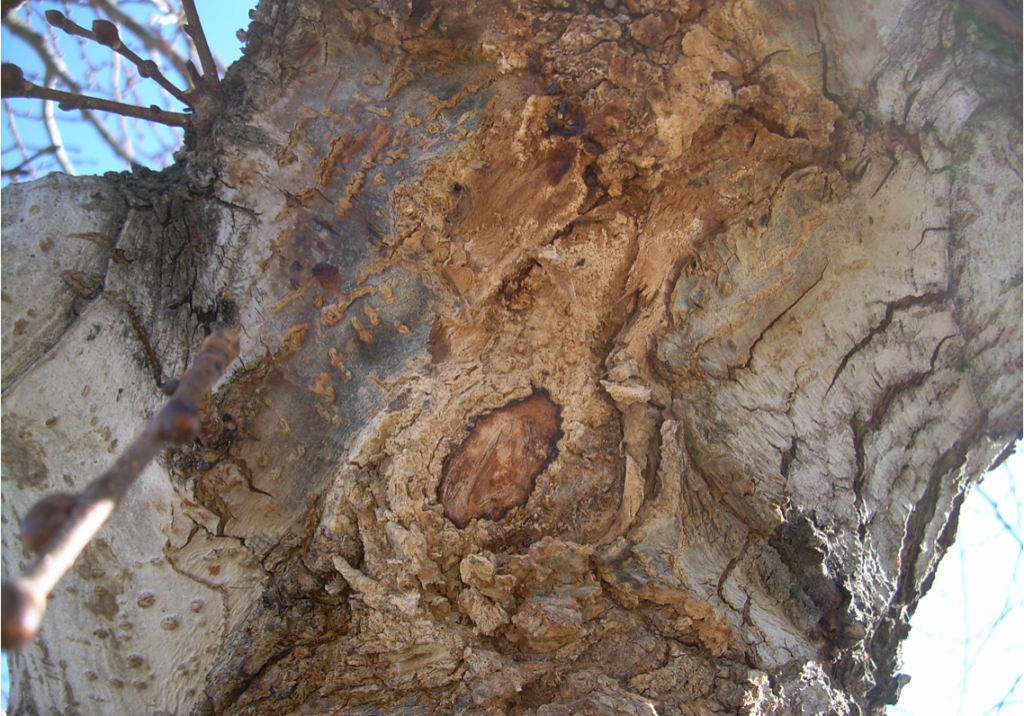
Slime flux, also known as bacterial slime or bacterial wetwood, is a bacterial disease of certain trees, primarily elm, cottonwood, poplar, boxelder, ash, aspen, fruitless mulberry and oak. A wound to the bark, caused by pruning, insects, poor branch angles or natural cracks and splits, causes sap to ooze from the wound. Bacteria may infect this sap causing it to darken and stain the bark, eventually taking on a foamy appearance and unpleasant odor. This slimy ooze becomes toxic to the bark and eats into the tree. Additionally, the fermented sap attracts insects like flies, ants, and maggots.
How A Basic Diagnoses Is Made
Slime flux is identified by dark liquid streaks running vertically below an injury and a foul-smelling and slimy seepage running down the bark.
PESTS, PROBLEMS AND THEIR TREATMENTS
Ash Borer
Aspen Gall
Aspen Black Leaf Spot
Birch Leafminer
Birch Stink Bugs
Black Locust Borer
Black Turpentine Beetle/Pitch Moth
Boxelder Webworms
Bronze Birch Borer
Chlorosis
Codling Moth
Coryneum Blight
Conifer Bark Beetle Ground
Elm Leaf Beetle
Fall Poplar Borer
Fall Willow Borer
Fire Blight
Greater Peach Tree Borer
Gummosis
Honey Locust Borer
Lesser Peach Tree Borer
Oak Bullet Gall
Oak Lace Bugs
Oak Leaf Blister
Oak Webworms
Pine Tip Weevil
Powdery Mildew
Sawfly
Scale
Slime Flux
Spider Mites
Spring Poplar Borer
Spring Willow Borer
Spruce Cooley Gall Adelgid
Strawberry Root Weevil
Sycamore Anthracnose
Fruitworm